
FixMyInflatable — inflatable repair training
CallGet Pricing

Bounce House Seam Repair: Single vs. Double Needle

For inflatable repairs, a double-needle machine is usually excessive because your operation is focused on repair work, not manufacturing. A portable single-needle walking-foot machine is typically the better choice and can simply make a second pass to recreate a second row of stitching when needed. The biggest advantage of the portable machine is its ability to sew through thicker, layered areas of vinyl, which are often the same high-stress areas where seams break down.
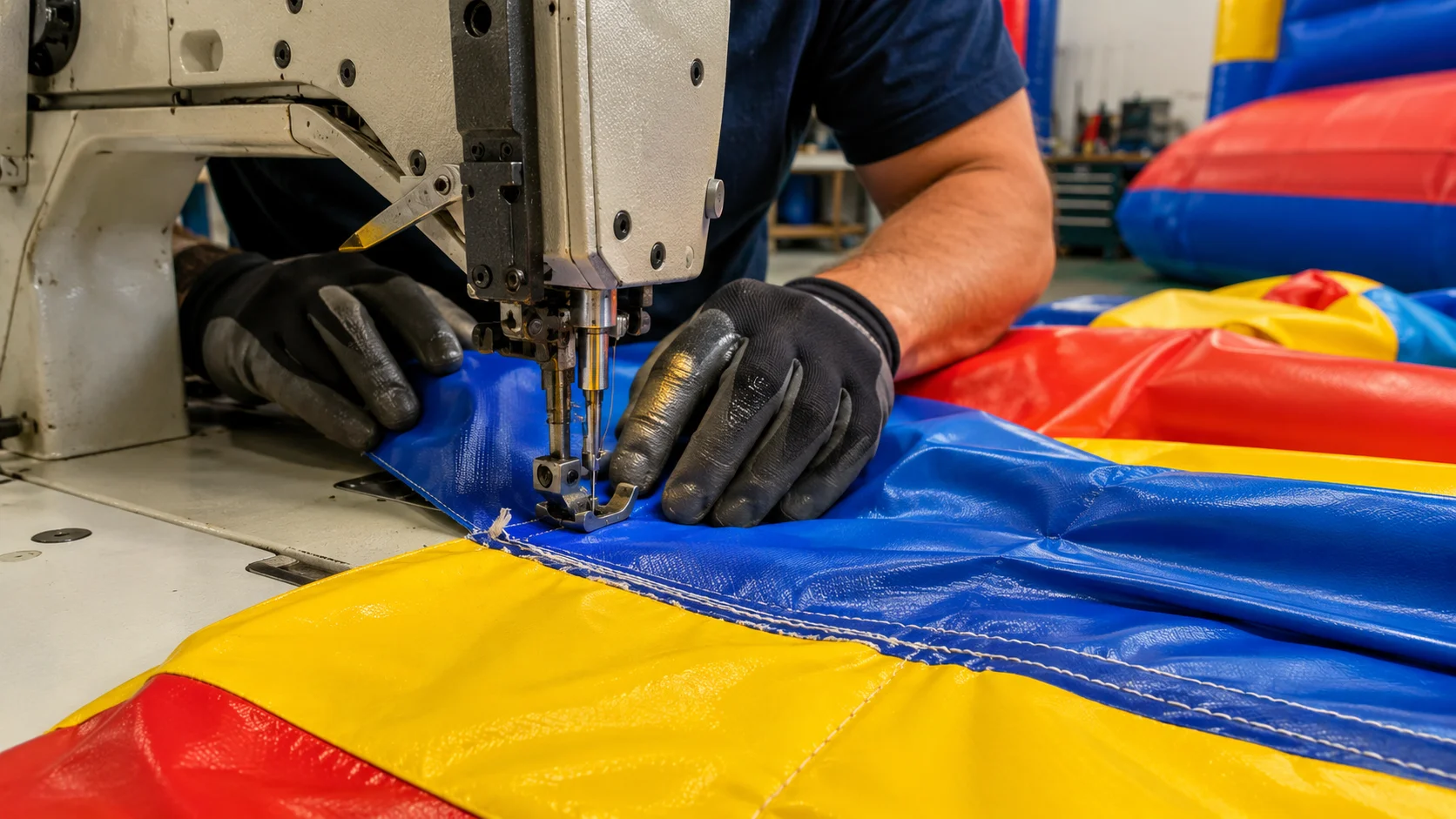
Restitching a bounce house seam on a walking-foot sewing machine

Why seams need a machine, not glue

A failed sewn seam is a structural stitching problem. Glue does not replace the original stitch line. The seam needs to be realigned and restitched with a machine that can feed the vinyl layers consistently.

Adhesive may be part of a patch or reinforcement method in the right location, but do not treat glue-the-seam-shut as a substitute for rebuilding a failed sewn seam.

Thread, needles, and setup

Use bonded nylon or polyester thread and a heavy-duty or titanium needle that are appropriate for the machine, the thread, and the layers being repaired. The goal is consistent feeding and a clean stitch through coated vinyl without skipped stitches.

Machine setup matters more than chasing a universal thread or needle number. Repair thickness changes from seam to seam, especially where multiple vinyl layers, reinforcement, or original construction stack together.

Why a double-needle machine is usually excessive for repairs

A double-needle machine makes sense in manufacturing, where the same two-row seam may be repeated all day. Repair work is different. One job may be a single failed seam, the next may be a baffle, slide blanket, strap, zipper, or thick layered stress point.

For a repair operation, a portable single-needle walking-foot machine is usually the more flexible choice. If the original construction used two parallel rows, make a careful second pass for the second stitch line. You still recreate the two-row construction without dedicating the shop to a double-needle machine.

The bigger advantage is access and thickness. The areas that fail are often the same places where multiple layers of vinyl stack together. A portable repair machine needs to feed those layered areas consistently.

Accessing the damage

The hardest part of seam repair is often just getting to the seam on a big unit. A repair table with a slot lets you feed the seam through the machine without fighting the rest of the inflatable. This is one of the first things you set up as an inflatable repair technician.

How to repair a single-needle seam

Restitching a standard bounce house seam on a walking-foot machine.

  1. Step 1
    Deflate and access the seam

    Deflate and access the seam — a slotted repair table makes this far easier.

  2. Step 2
    Realign the seam

    Trim any frayed threads and realign the seam to its original position.

  3. Step 3
    Follow the original stitch line

    Follow the existing stitch holes/line with a single row, back-tacking both ends.

  4. Step 4
    Recreate the original construction and reinforce if needed

    If the original seam used a second row of stitching, make a second controlled pass. If the failure occurred at a repeated high-stress point, add the appropriate reinforcement for that area rather than simply adding random glue over the stitch line.

Frequently asked questions

Can I repair an inflatable seam with a regular sewing machine?

No — a home machine can't feed multiple layers of coated vinyl or handle the heavy thread. You need a walking-foot machine.

Single or double needle — which is better for a repair operation?

A portable single-needle walking-foot machine is usually the better repair-shop choice because one machine can handle many repair types and thick layered areas. When a second stitch row is needed, make a second pass. Double-needle machines are more useful for repetitive manufacturing work.

Do I glue every seam after stitching?

No. Match the original construction and the type of repair. A failed sewn seam needs structural stitching first. Adhesive is used where the patch or repair method calls for it, not automatically over every stitch line.

GET PRICING NOW

Learn every inflatable repair — hands-on class, online course, and the machine that makes it possible.