
FixMyInflatable — inflatable repair training
CallGet Pricing

Commercial Inflatable Maintenance Checklist (Seasonal)

Commercial inflatable maintenance is a repeatable cycle: clean it, dry it completely, inspect the high-wear areas, catch small failures early, service the blower, and store the unit properly. A quick post-rental check finds obvious damage. A deeper active-season and seasonal inspection catches the problems that build slowly.
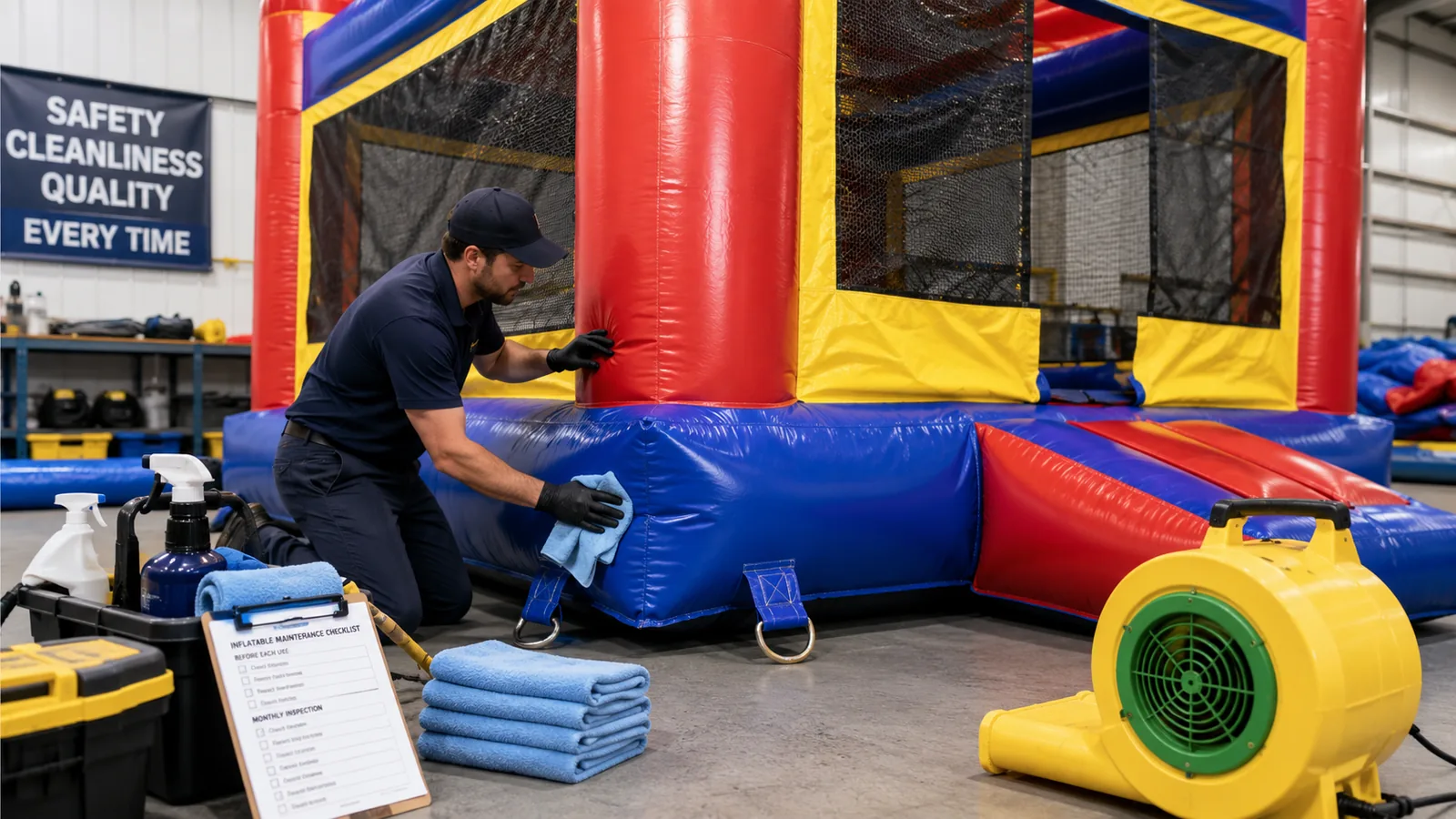
Rental operator wiping down a red, yellow, and blue commercial bounce house next to a maintenance checklist, cleaning supplies, and a blower

After every rental

  • Remove dirt, grass, and debris.
  • Spot-clean the unit as needed.
  • Dry the inflatable completely before rolling.
  • Scan for holes, open seams, pulled stitching, and torn netting.
  • Check straps, anchor points, buckles, flaps, and zippers for visible damage.
  • Note any change in shape that could point to an internal baffle problem.
  • Tag damage before the unit goes back into storage.

The goal is not to perform a full teardown after every rental. The goal is to find the new problem while it is still small and while you remember what happened on the last setup.

During the active rental season

Periodically inflate each working unit for a more deliberate inspection, especially when the unit has been booked heavily.

  • Follow high-stress seam lines and look for pulling or failed thread.
  • Inspect netting corners and vinyl borders.
  • Check climb areas, entrances, exits, and landing transitions.
  • Inspect anchor points and straps.
  • Watch the shape of the unit for bulges or sagging.
  • Inspect the blower cord and GFCI plug.
  • Check the blower intake and impeller area for debris with the blower unplugged.
  • Record repairs instead of relying on memory.

Seasonal deep inspection

At the beginning or end of the season, inspect the entire unit as a system.

  • Seams: Follow major structural and high-traffic seams.
  • Vinyl: Look for widespread brittleness, peeling, delamination, or repeated failures in unrelated areas.
  • Netting: Inspect the full perimeter, not only the obvious tear.
  • Baffles and shape: Inflate the unit and look for bulging, sagging, or sections that no longer hold the intended form.
  • Slide blankets: Inspect the full riding surface for broad wear, repeated tears, and attachment condition.
  • Zippers, straps, and hardware: Check the surrounding vinyl as well as the hardware itself.
  • Blower: Inspect the cord, GFCI, intake, impeller area, and operating behavior.

Before long-term storage

Store the unit only after it is clean and fully dry. Keep it off damp floors and away from pests. Roll it in a way that avoids unnecessary hard creases and repeated pressure on the same damaged fold line.

Why maintenance pays

Catching a small tear or a fraying seam early turns a big, downtime-heavy repair into a quick fix — keeping units rental-ready and extending their life. Operators who repair in-house can act on inspection findings immediately instead of waiting on a shop.

Use a simple maintenance and repair log

DateUnitInspection typeDamage foundRepair neededRepair completedTestedReturn to service

A log helps you spot repeat failures. If the same seam keeps reopening, review the repair method and the stress point. If new failures keep appearing in unrelated areas of the same unit, inspect the overall material condition and use the repair-or-replace framework.

Printable checklist content

Post-rental

  • Clean
  • Dry completely
  • Check holes
  • Check seams
  • Check netting
  • Check straps / anchors / hardware
  • Note shape changes
  • Tag damage

Active season

  • Inflate and inspect high-stress areas
  • Inspect netting corners
  • Inspect climb / landing areas
  • Inspect blower cord and GFCI
  • Clear blower debris with power disconnected
  • Update repair log

Seasonal

  • Full seam inspection
  • Full vinyl-condition inspection
  • Baffle / shape inspection
  • Slide-blanket inspection
  • Hardware and zipper inspection
  • Blower inspection
  • Review repeat-failure history

Seasonal inflatable maintenance routine

The recurring routine that keeps commercial inflatables rental-ready.

  1. Step 1
    Clean after every rental

    Remove dirt and debris and spot-clean stains before the unit goes away.

  2. Step 2
    Dry completely

    Dry the unit fully before rolling — trapped moisture causes mildew and weakens material and adhesives.

  3. Step 3
    Quick-scan for damage

    Look for new holes, loose seams, or torn netting so small issues don't become big ones.

  4. Step 4
    Deep-inspect each season

    Check seams, netting, baffles, zippers, anchor points, and the blower thoroughly.

  5. Step 5
    Store clean, dry, and loosely rolled

    Store off damp floors and away from pests to avoid creases and fold-line wear.

Frequently asked questions

How do you maintain a commercial bounce house?

Clean, dry thoroughly, inspect seams/netting/blower regularly, and store clean and dry.

Why do I need to dry an inflatable before storage?

Trapped moisture causes mildew and weakens the material and adhesives.

How often should I inspect rental inflatables?

A quick check after every rental and a deeper inspection each season.

GET PRICING NOW

Learn every inflatable repair — hands-on class, online course, and the machine that makes it possible.