
FixMyInflatable — inflatable repair training
CallGet Pricing

Common Bounce House Problems (and How to Fix Each)

The most common bounce house problems are holes and tears, failed seams, blown internal baffles, worn or torn netting, broken zippers and straps, and blower issues. Most are repairable in-house with a walking-foot machine, the right vinyl adhesive, and some training. Here's a quick field guide to each — with links to the full how-to for every one.
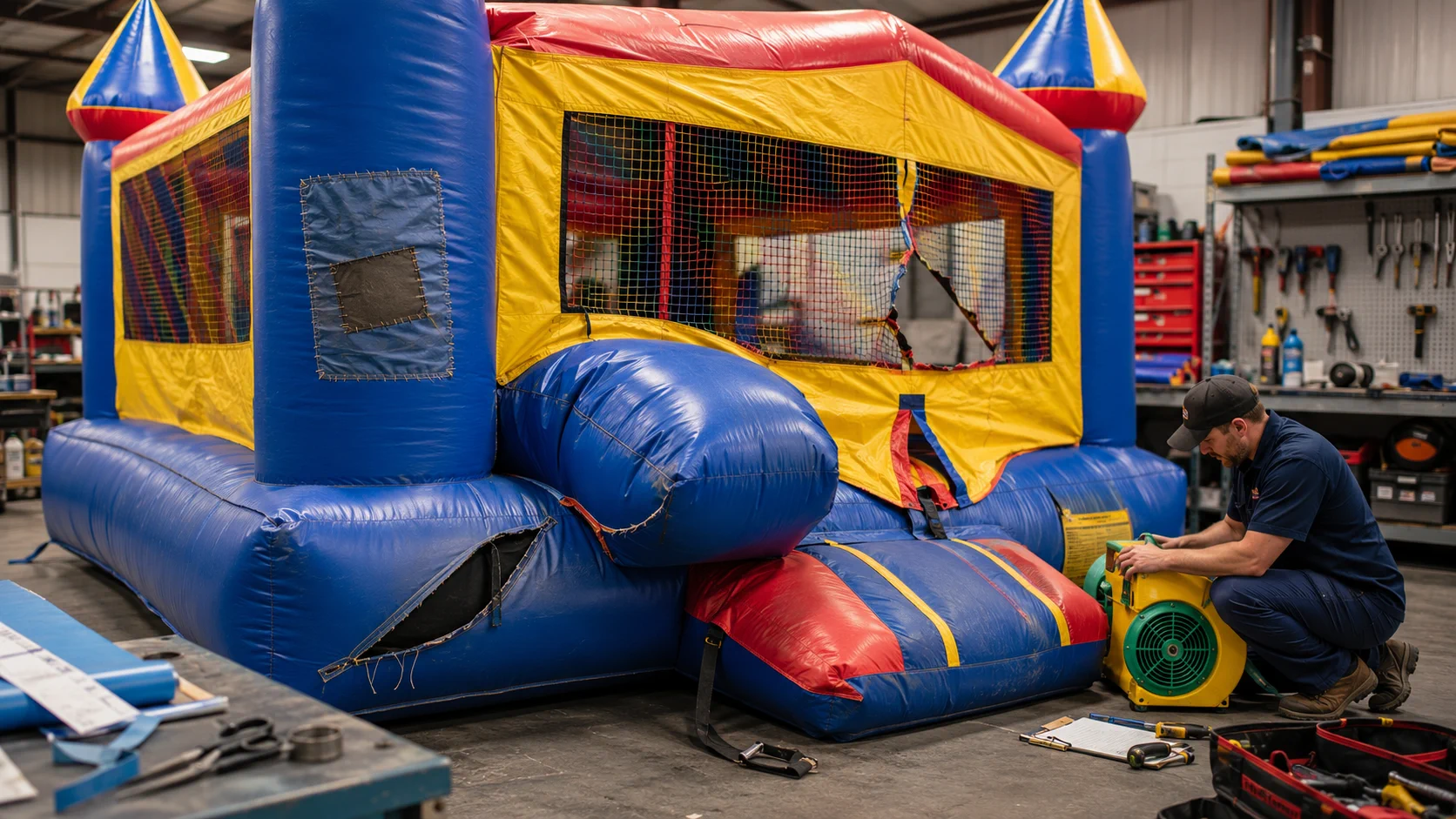
Common bounce house damage points

Start with the symptom, not the repair

The fastest way to make a bad repair decision is to choose the repair method before you know what failed. A soft unit can be a blower problem or an air-loss problem. A bulge can be an internal baffle. A small visible tear can continue farther along a failed seam.

Use the symptom to narrow the problem first.

Symptom-to-repair quick reference

What you seeLikely problemFirst thing to inspectFull guide
Small localized hole or tearSurface damageSurrounding vinyl and location of the holePatch a Bounce House Hole
Stitch line openingFailed seamFull length of the original seamBounce House Seam Repair
Unit bulges or sags while still inflatedBlown internal baffleShape change and internal attachment areaInflatable Baffle Repair
Mesh torn or pulling from the borderNetting failureMesh condition, corners, and surrounding vinylReplace Bounce House Netting
Blower will not startElectrical or mechanical blower issueGFCI, cord, impeller, capacitor, bearingsBlower Repair
Blower runs but unit still feels softAir loss or underperforming blowerOpen seams, leaks, and blower outputInflatable Repair Overview
Strap, flap, or zipper pulls looseAttachment / hardware failureSurrounding vinyl and original stitch areaRepair training / course
Repeated new failures across the unitWidespread material wearFlexibility and condition of the base vinylRepair vs. Replace

Holes and tears

Small holes in low-stress areas: clean, patch, glue, cure. Bigger tears or anything on a seam: stitch. See the patching and vinyl glue guides below.

Before patching, confirm the damage is actually on a flat surface and not running into a seam or high-stress attachment area. The location changes the repair method.

Failed or leaking seams

Failed seams open along the stitch line or pull apart where layers meet. Trace the failure beyond the obvious opening, realign the original construction, and restitch it with a walking-foot machine. Reinforce repeated stress points when the surrounding construction calls for it.

Blown baffles (unit loses its shape)

Bulging or sagging while still inflated points to a failed internal wall. Access the damaged area, restitch the internal baffle, and close the access seam.

The visible bulge is the symptom. The failed seam is inside the unit. This is why a baffle problem can look catastrophic even when the outer skin has no obvious tear.

Torn or detached netting

A safety issue — cut out the old mesh and stitch in new, reinforcing corners.

Zippers, straps, and flaps

Replace worn zippers and restitch straps and flaps so the unit anchors and closes properly. Covered in the online course and 3-day class.

Blower won't run or won't hold air

Check the GFCI, cord, impeller, and for leaks in the unit before condemning the motor.

Separate "the blower will not run" from "the blower runs but the inflatable stays soft." The first points toward the blower. The second may be a leak or seam problem in the unit.

When one repair turns into a unit-condition problem

One localized failure is normal repair work. Repeated new failures in unrelated areas deserve a broader inspection. If the vinyl is becoming brittle, peeling, delaminating, or breaking down across the unit, use the repair-or-replace guide before investing in another isolated repair.

When to call it — repair vs. replace

Most damage is fixable. Replace only when the vinyl is failing across the whole unit.

Frequently asked questions

What's the most common bounce house repair?

Holes/patches and seam repairs are the most frequent; netting and blowers are close behind.

Can most bounce house damage be repaired?

Yes — holes, seams, baffles, netting, zippers, and many blower issues are all repairable in-house.

Do I need special equipment?

For anything structural, a walking-foot sewing machine and the right vinyl adhesive.

GET PRICING NOW

Learn every inflatable repair — hands-on class, online course, and the machine that makes it possible.