
FixMyInflatable — inflatable repair training
CallGet Pricing

Repair vs. Replace: When to Fix an Inflatable, When to Toss It

A dramatic-looking failure does not automatically mean a commercial inflatable is done. One torn seam, one blown baffle, one damaged netting panel, or one localized hole may still be a straightforward repair. Replacement becomes the better decision when the base material is failing across the unit, not simply because one repair looks ugly.
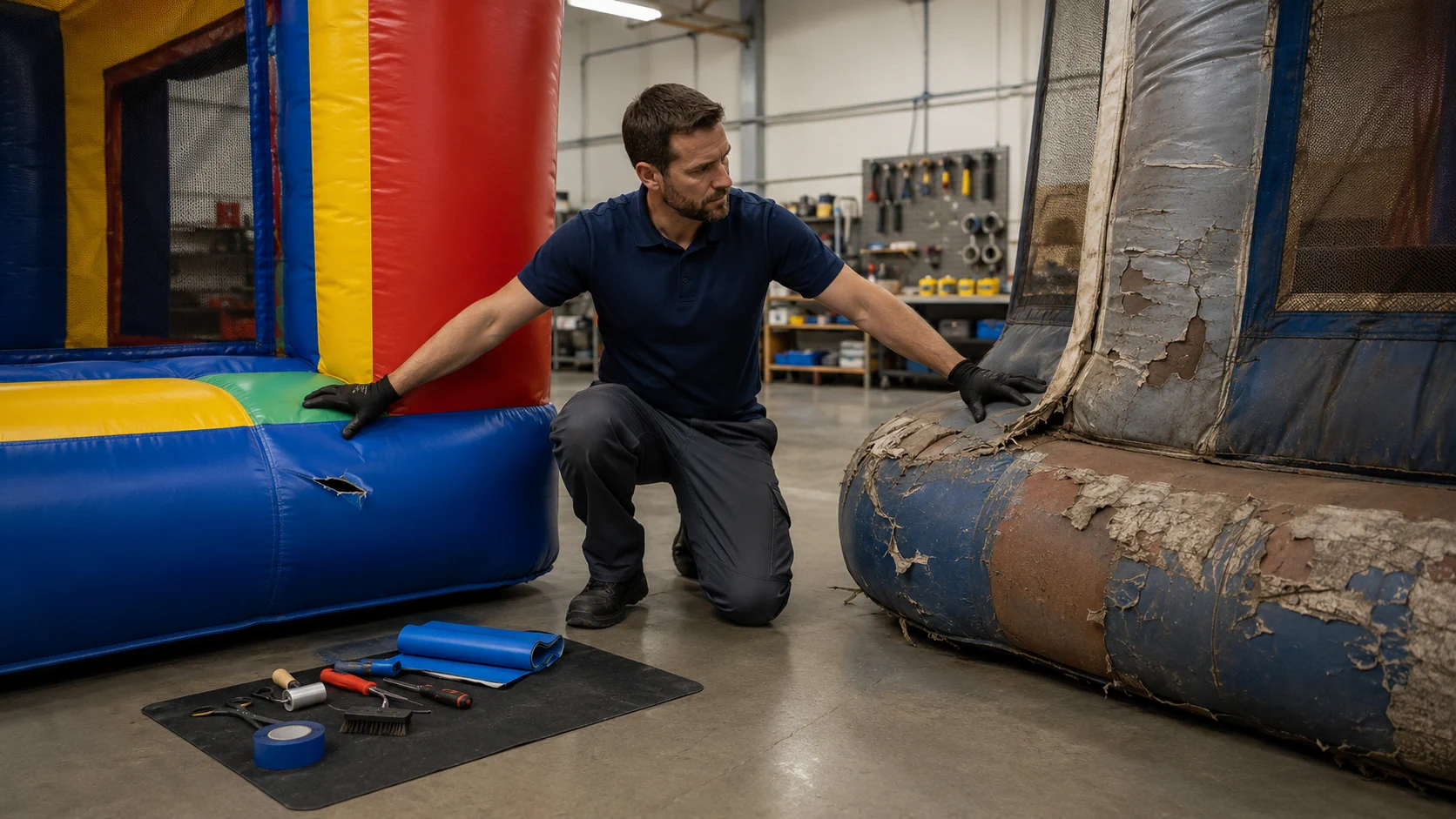
Comparing a worn inflatable to a repairable one in a workshop

Repair it if…

  • The damage is localized (one hole, one seam, one baffle, worn netting).
  • The vinyl elsewhere is still sound and flexible.
  • The unit is otherwise structurally solid and not that old.
  • The repair cost is well below replacement (almost always true for a single repair).

Replace it if…

  • The vinyl is failing in multiple places or is brittle/delaminating across the unit.
  • You're repairing the same unit repeatedly in different spots — the material is worn out.
  • Safety-critical structure is compromised beyond a reliable repair.

The cost logic

A commercial inflatable is a major purchase; a single repair is a fraction of that. So the default is repair — replacement only makes sense when you're throwing good money after a unit whose material is done. If you repair in-house, the calculus tilts even further toward repair, since your cost is just materials and time.

The 5-question repair-or-replace check

Before you price a new unit, inspect the damaged inflatable with these five questions in mind.

  1. Step 1
    Is the damage localized?

    One seam, one hole, one baffle, one netting panel, or one damaged attachment point usually points toward repair. Multiple unrelated failures across the unit are a different warning sign.

  2. Step 2
    Is the surrounding vinyl still flexible and sound?

    Look beyond the tear. If the surrounding material still feels normal and holds stitching, the damaged area may be repairable. If the vinyl is brittle, peeling, delaminating, or breaking down in multiple areas, the repair may only move the next failure somewhere else.

  3. Step 3
    Are new failures appearing in different places?

    Reopening the exact same repair can indicate a bad repair method. New failures appearing across unrelated areas can indicate the material itself is reaching the end of its usable condition.

  4. Step 4
    Can the structural or safety component be rebuilt correctly?

    Baffles, seams, netting, straps, and other components can often be repaired or replaced. The question is whether the surrounding construction is still strong enough to support a reliable repair.

  5. Step 5
    Does the repair make financial sense compared with replacement and downtime?

    Compare the repair itself, shipping, and lost rental time with the cost of replacing the unit. A local or in-house repair can change that decision because the unit may return to service much faster.

Quick decision examples

What you findLikely directionWhy
One torn seam on otherwise sound vinylRepairLocalized structural failure
One blown baffle; outer shell still soundRepairInternal failure can often be accessed and restitched
One torn netting panelRepair or replace the netting panelThe rest of the unit may be unaffected
One worn slide blanket; slide body is soundRebuild/replace the blanketThe wear surface can be replaced separately
Repeated new tears in unrelated areasInspect closelyWidespread material breakdown may be starting
Brittle, peeling, or delaminating vinyl across the unitReplaceBase material is failing, not one component

Don't judge the repair by how dramatic it looks

A blown internal baffle can make an inflatable bulge or sag so badly that the unit looks destroyed. A long seam can open and make a large section lose shape. Those failures can look worse than a small surface hole, but appearance alone does not tell you whether the unit is finished.

Diagnose the failed component and inspect the surrounding material before making the replace decision.

Frequently asked questions

Is it worth repairing a bounce house?

Almost always for localized damage — repair is far cheaper than replacing a commercial unit.

When should I replace instead of repair?

When the vinyl is failing across the whole unit or you're repeatedly fixing new failures — the material is at end of life.

How many times can you repair the same inflatable?

As long as the base material stays sound; once failures spread across the unit, replace it.

GET PRICING NOW

Learn every inflatable repair — hands-on class, online course, and the machine that makes it possible.