FixMyInflatable — inflatable repair training
CallGet Pricing

Bounce House Repair Kit: Tools & Supplies You Actually Need

A practical inflatable repair kit starts with the equipment that lets you handle the repairs that actually take units out of rotation: failed seams, holes, patches, damaged netting, baffles, Velcro, straps, and worn slide blankets. The machine is the center of the setup, but the supporting supplies are what let you finish the job cleanly.
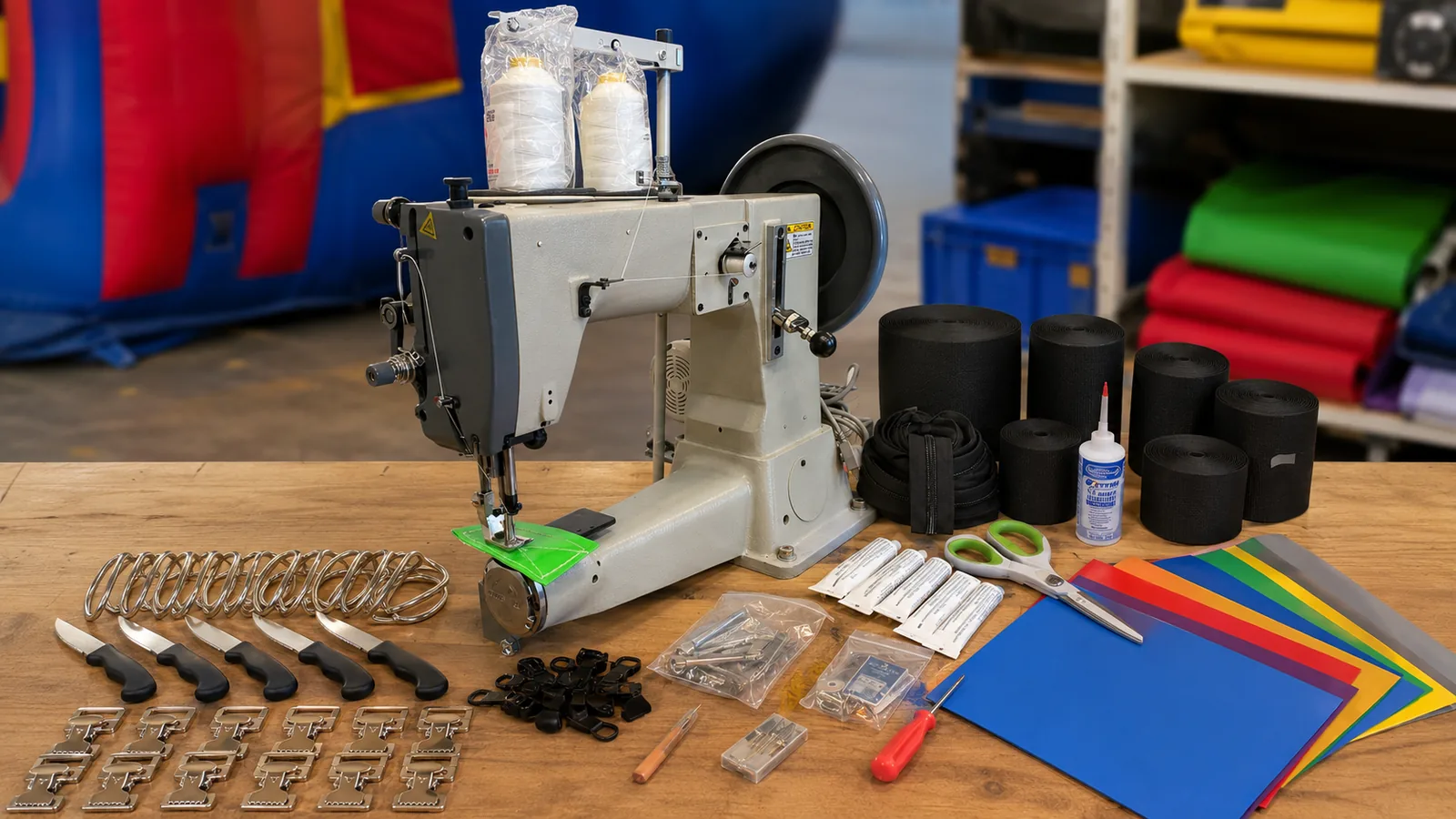
Walking-foot sewing machine set up with vinyl patches, thread, needles, seam rippers, adhesive, and buckles for inflatable repair

The core repair kit

Tool or supplyWhat it is used for
Portable walking-foot sewing machineStructural seams, baffles, netting, straps, Velcro, and thick layered repairs
Commercial repair vinylPatches, reinforcement pieces, replacement material, and fabricated components
Vinyl adhesive for coated PVCBonded patches and repair methods that call for adhesive
Bonded nylon or polyester threadHeavy repair stitching
Heavy-duty or titanium needlesSewing coated vinyl and layered repair areas
Seam rollerPressing bonded patches from the center outward and removing trapped air
Seam rippersRemoving failed stitching without randomly cutting the surrounding vinyl
Cutting toolsClean vinyl, mesh, Velcro, and patch cuts
Compatible vinyl cleaner / prep suppliesCleaning and preparing repair surfaces
Safety meshReplacing failed bounce-house or jumper netting
Repair tableSupporting large units and helping feed seams and material into the machine

Why the portable machine is the center of the kit

Most structural inflatable repairs are sewing jobs. Failed seams, internal baffles, netting, straps, and the Velcro used on rebuilt slide blankets all require controlled stitching through commercial material.

For repair work, a portable single-needle walking-foot machine is usually more useful than a dedicated double-needle setup. A second stitch row can be made with a second pass when needed. The bigger repair-shop advantage is the ability to sew the thick, layered areas where commercial inflatables commonly break down.

Repair work is not a manufacturing line. One machine needs to handle different units, different access points, and different material stacks.

Starter setup vs. shop setup

You do not need to buy every specialty item on day one. Start with the machine and the materials needed for seams and patches, then build inventory around the repairs you are actually seeing.

If you're training with us, the essentials and supplier lists are part of the program.

Start hereAdd as your repair work grows
Walking-foot machineDedicated repair table
Commercial vinylSafety mesh inventory
Vinyl adhesiveVelcro / hook-and-loop material
Thread and needlesAdditional common vinyl colors
Seam rollerSpare hardware used in your common repair work
Seam rippersOrganized repair bins by material type
Cutting and prep toolsA repair intake and job-tracking system

What not to put in a commercial inflatable repair kit

Skip craft glue, hot glue, super glue, decorative mesh, and a household sewing machine marketed for light fabric work. The issue is not whether those products can stick or make a stitch once. The issue is whether the repair can flex, hold under repeated load, and survive commercial use.

Frequently asked questions

What's in an inflatable repair kit?

A walking-foot machine, vinyl, adhesive, thread, needles, rollers, rippers, cutter, cleaner, mesh, and a repair table.

What should I buy first?

The machine plus adhesive, vinyl, thread, and needles — enough to handle patches and seams.

Where do I get commercial vinyl and supplies?

Through inflatable/vinyl suppliers — our training includes a supplier and materials list.

GET PRICING NOW

Learn every inflatable repair — hands-on class, online course, and the machine that makes it possible.