
FixMyInflatable — inflatable repair training
CallGet Pricing

Vinyl Patching & Glue: The Right Way vs. the Wrong Way

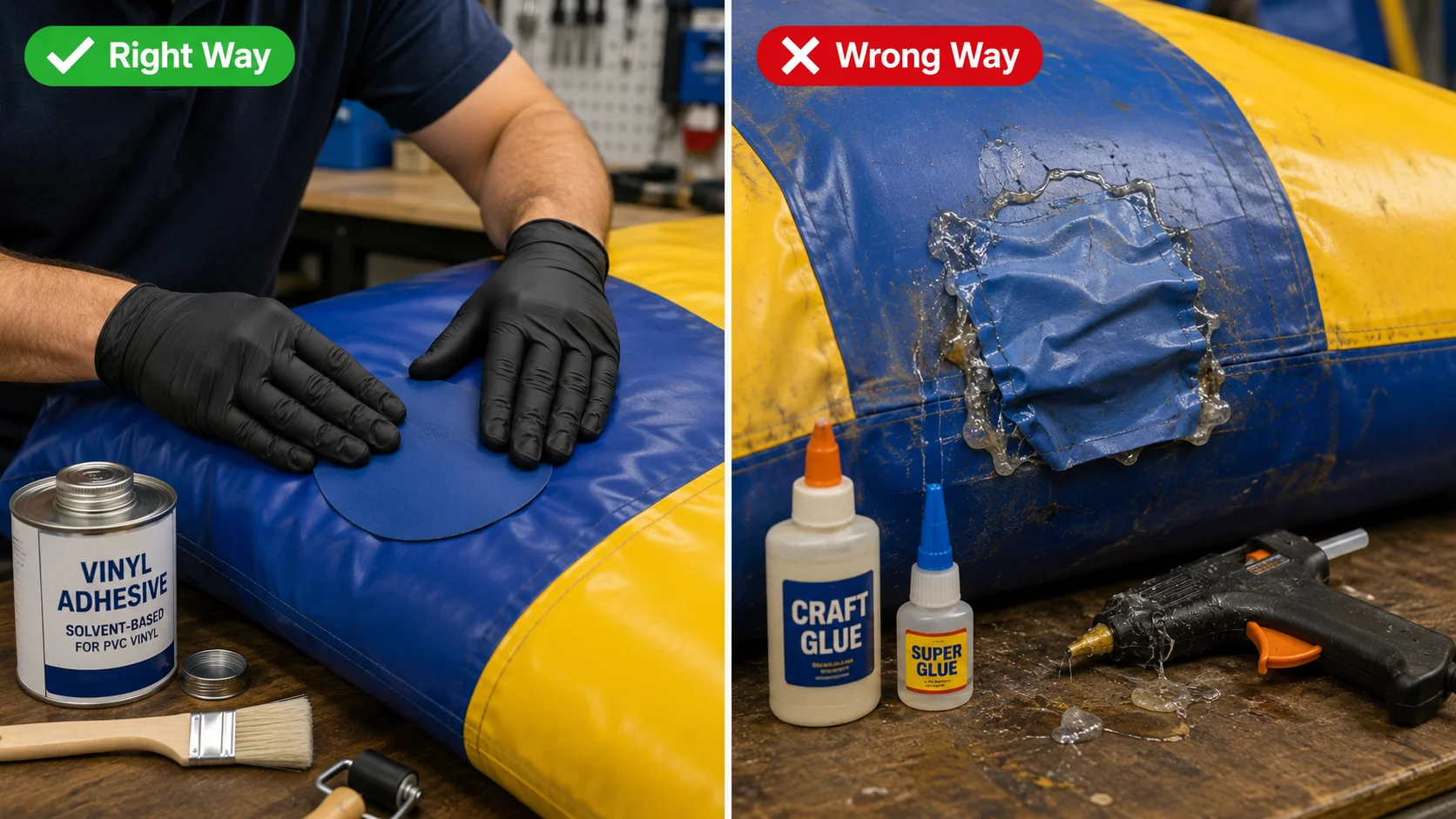
The right way to glue inflatable vinyl is a solvent-based vinyl adhesive/cement made for coated PVC, applied to two clean, dry, prepped surfaces, given proper tack time, pressed out from the center, and cured under weight. The wrong way — craft glue, super glue, hot glue, or skipping prep and cure time — fails because those bonds aren't flexible or strong enough for a flexing, air-holding surface.
Applying vinyl adhesive to a bounce house patch

Why the wrong glue fails

Commercial inflatable vinyl flexes, folds, heats up, cools down, gets rolled, and moves under load. Craft glue, hot glue, and super glue are not designed to become a flexible repair bond on coated PVC fabric.

The correct adhesive is a vinyl adhesive or cement made for the material being repaired. Even the right adhesive can fail when the surfaces are dirty, damp, poorly prepped, joined before the correct tack stage, or inflated before the bond has cured.

Glue, stitch, or both?

Damage typePrimary repair direction
Small localized hole in a suitable low-stress surfaceBonded vinyl patch may be appropriate
Failed sewn seamRestitch the seam
Blown internal baffleAccess and restitch the internal attachment
Torn safety nettingReplace/restitch the mesh panel
Failed strap, zipper, or structural attachmentStructural sewing repair
Larger tear or high-stress patch areaMay require a bonded patch plus stitching or reinforcement, depending on construction

Do not assume every stitch line needs glue, and do not assume every tear can be solved with adhesive. Match the repair method to the component that failed and the original construction.

Surface prep is part of the repair

Adhesive cannot bond well to water, dirt, mildew residue, oily contamination, or loose material. Clean both the patch and the unit with a prep method compatible with the coated PVC and the adhesive you are using.

Let both surfaces dry completely. Follow the adhesive manufacturer's instructions for application, tack time, and cure time. Those times can change by product and environment, so do not invent one universal "wait 10 minutes" rule for every vinyl cement.

Avoid aggressive solvent improvisation unless the material and adhesive instructions specifically call for it.

The four shortcuts that cause patch failures

  1. Step 1

    Using the wrong adhesive

  2. Step 2

    Patching damp or contaminated vinyl

  3. Step 3

    Skipping tack time

  4. Step 4

    Inflating before the bond has cured

How to glue an inflatable vinyl patch the right way

Surface prep, application, and cure for a patch that holds.

  1. Step 1
    Confirm glue is the right repair

    Make sure the damage is a patch-type failure and not a failed structural seam, baffle, netting attachment, strap, or zipper area.

  2. Step 2
    Clean and dry both surfaces

    Prep the patch and the inflatable surface. Remove contamination and let the area dry completely.

  3. Step 3
    Apply the adhesive as directed

    Use thin, controlled coverage on the surfaces required by the adhesive instructions. More glue is not automatically a stronger repair.

  4. Step 4
    Respect the tack stage

    Join the patch at the stage specified for the adhesive. Joining too early or too late can weaken the bond.

  5. Step 5
    Press from the center outward

    Use controlled pressure and a seam roller where appropriate to push trapped air toward the edge instead of sealing bubbles under the patch.

  6. Step 6
    Cure before inflation

    Keep the repair under the required pressure or weight and allow the full cure time called for by the adhesive before inflating the unit.

Frequently asked questions

What glue works on bounce house vinyl?

A solvent-based vinyl adhesive/cement made for coated PVC fabric. Not craft, super, or hot glue.

Why did my patch peel off?

Usually poor surface prep, not enough tack/cure time, or trapped air — or a glued-only patch on a high-stress area that needed stitching.

Do I need to stitch and glue?

On seams and high-stress areas the seam needs structural stitching first. Adhesive is used where the patch or repair method calls for it, not automatically over every stitch line.

GET PRICING NOW

Learn every inflatable repair — hands-on class, online course, and the machine that makes it possible.