
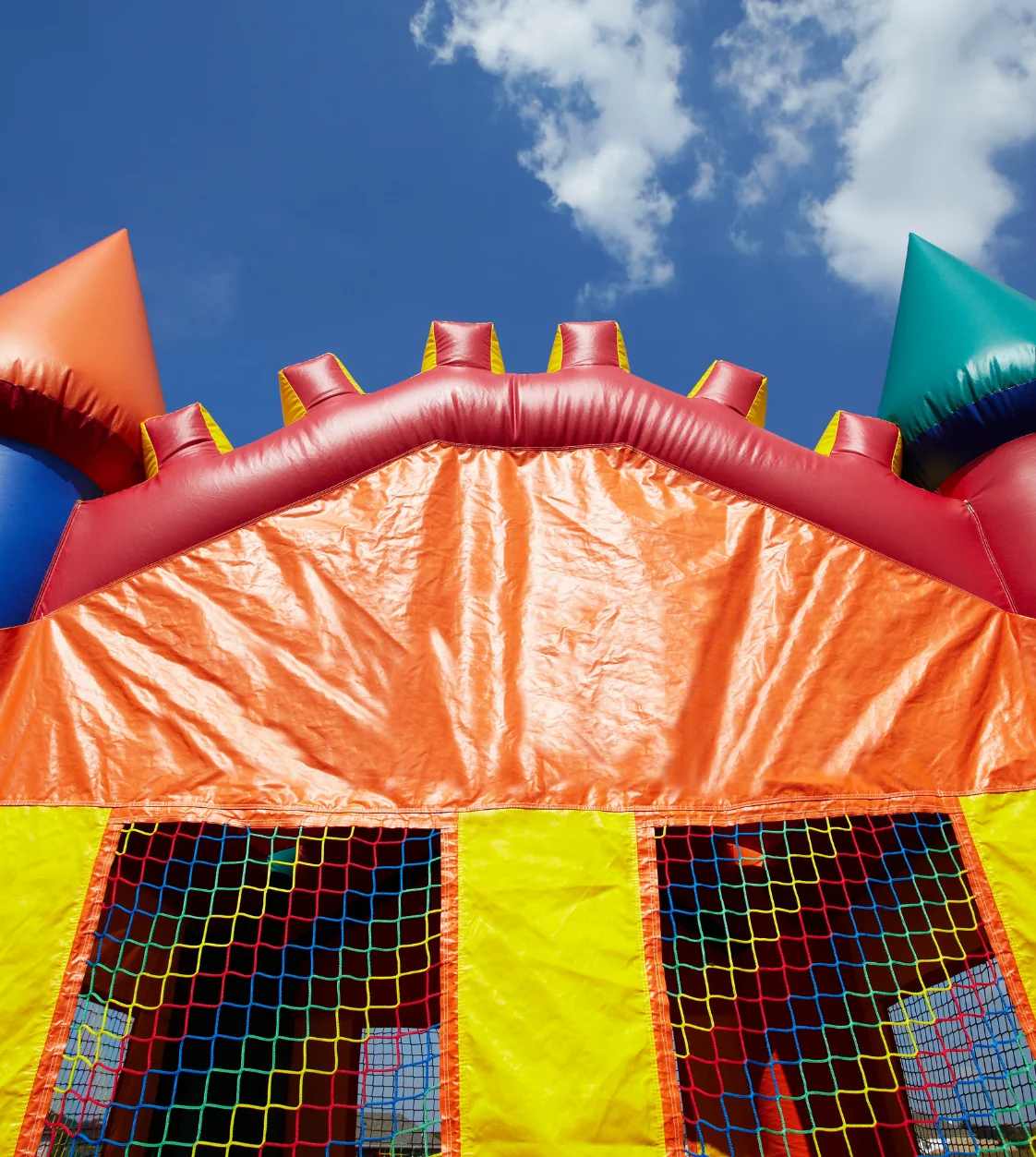
Long structural seams
Big units have long load-bearing seams; a failure here can take the whole unit down.
For Rental Operators · Nationwide
Long structural seams, blown baffles, and big-unit wear — here's how large-format commercial inflatables are repaired and kept in service.
⭐ 5.0 on Google · Trusted by rental operators nationwide
Big units have long load-bearing seams; a failure here can take the whole unit down.
The internal walls that hold a large unit's shape tear loose and it sags or won't stand — repaired through a seam access point.
Bigger tears need bigger patches, bonded and stitched, then reinforced.
Large units move a lot of air; small leaks add up and overwork the blower — find and seal them.
Commercial rental schedules wear seams, anchor points, and high-traffic panels faster.
Large-format units use the same repair techniques as smaller inflatables — seams, patches, baffles — just at bigger scale, with more at stake if a structural seam fails. Diagnosis matters: find every leak and weak seam before the unit goes back out.
All of it runs on a heavy-duty walking-foot machine. The scale is why doing it in-house saves the most — freighting a large commercial unit out for repair is slow and expensive.
Repairing an internal baffle that has torn loose on a large-format unit.
The biggest difference between repairing one inflatable and managing a rental fleet is the workflow. When several units are moving in and out every week, repair work needs a repeatable triage process.
Do not roll a damaged unit back into the rental line and hope someone remembers the problem. Mark the unit, record the damage area, and keep it out of rotation until it has been inspected.
The reported problem may not be the only problem. Inflate the unit and check shape, seams, netting, anchor points, zippers, straps, and blower performance before deciding the repair list.
If a unit needs a seam repair, a patch, and netting work, plan the order before you start. On a larger fleet, grouping similar repair work also makes better use of the machine, repair table, materials, and setup time.
Complete the repair, return the unit to full operating pressure, and inspect the repaired area under normal load and movement. A unit is not finished simply because the sewing is done.
Record what failed and what was repaired. Over time, the repair log shows which units, seams, and stress points are creating repeated downtime.
There is no single fleet size where every operator should bring repairs in-house. The decision depends on how often units are down, how far you ship for service, what freight costs, and how many rental days disappear while a unit is away.
In-house capability becomes more valuable when:
Keep this page focused on protecting a rental fleet. The separate business guide covers charging other operators for repair work.
A basic repair log turns "we keep fixing this unit" into something you can measure. If failures keep appearing in unrelated parts of the same inflatable, use the repair history when deciding whether the base material is beginning to fail.
| Date | Unit | Damage found | Repair performed | Tested | Returned to service |
|---|---|---|---|---|---|
Every repair on this page is something you can do in-house with the right training and the right machine. Bring repairs in, protect your rental days, and add a repair income stream by fixing other operators' units too.
The same way as smaller units — seam restitching, patching, and baffle repair on a walking-foot machine — just at larger scale. Diagnosis is bigger: find every leak and weak seam first.
Baffles are the internal walls that give an inflatable its shape. Constant pressure and heavy use tear them loose, and the unit sags or won't stand. They're repaired through a seam access point.
Almost always — replacing a large commercial inflatable costs thousands, while most failures are a fixable seam or baffle. In-house repair also avoids slow, expensive freight both ways.
Yes — a heavy-duty walking-foot machine with a cylinder arm and titanium needles, built to feed thick vinyl and stack layers.
Learn the repairs, get the machine, and keep every unit in rotation.